
- Home
- Academics
- GESA Blog
- Events
- Executives
- Community
- Gallery
- Team
- Contact Us

GESA-KNUST
Kwame Nkrumah University of
Science and Technology
College of Engineering
Contact Us
+233 55 574 1334Follow us on social media


Kwame Nkrumah University of
Science and Technology
College of Engineering
Explore insights, innovations, and student experiences from the heart of KNUST’s engineering community.
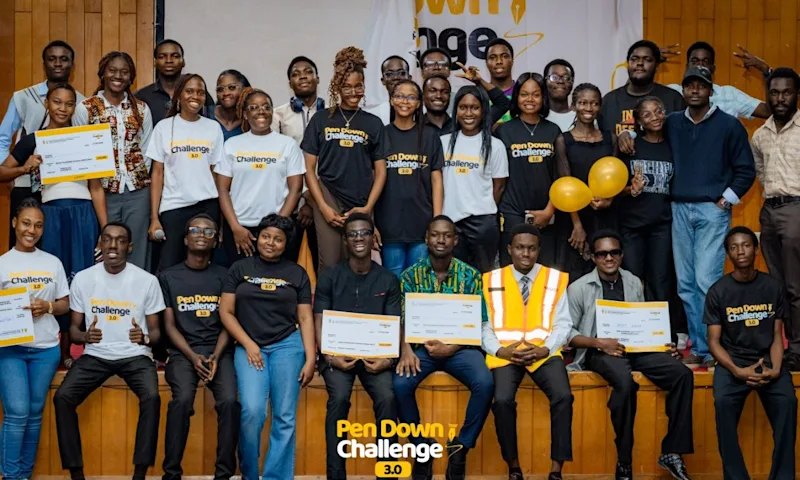
𝗧𝗵𝗲 𝗦𝘁𝗮𝗴𝗲 𝗪𝗮𝘀 𝗦𝗲𝘁. 𝗧𝗵𝗲 𝗪𝗼𝗿𝗱𝘀 𝗪𝗲𝗿𝗲 𝗥𝗲𝗮𝗱𝘆. 🎤✍️ Pendown Challenge 3.0 just wrapped up, and what an experience it was. Over three electrifying days, students from across the college came together to compete, learn, and express themselves through debate, public speaking, and spoken word. Starting from the faculty level, teams were groomed, selected, and tested before stepping onto the big stage. The preliminary and semi-final debate rounds on Wednesday and Thursday were intense — eight teams, sharp arguments, and no room for mediocrity. Friday's main event brought it all together: a communication and public speaking seminar, breathtaking spoken word performances, a public speaking competition, and the grand championship debate. In the end, excellence found its names: 🏆 Debate Winners: FCGESA Team 2 🎙️ Public Speaking Winner: Elvis Aboagye Asante But beyond the trophies, Pendown Challenge 3.0 was a reminder that the ability to think critically and speak boldly is one of the most powerful tools a student can carry into the world. Congratulations to every participant, judge, spoken word artist for giving of their best. A special thank you to our sponsors Intelligent Building Solutions HQ, and The Torah Group Of Companies for making this possible and the general secretary committee who made this possible. 👏 To the winners — the bar has been raised. 🔥 #PendownChallenge #GESA #StudentExcellence #PublicSpeaking #Debate #SpokenWord #KNUST
March 27, 2026
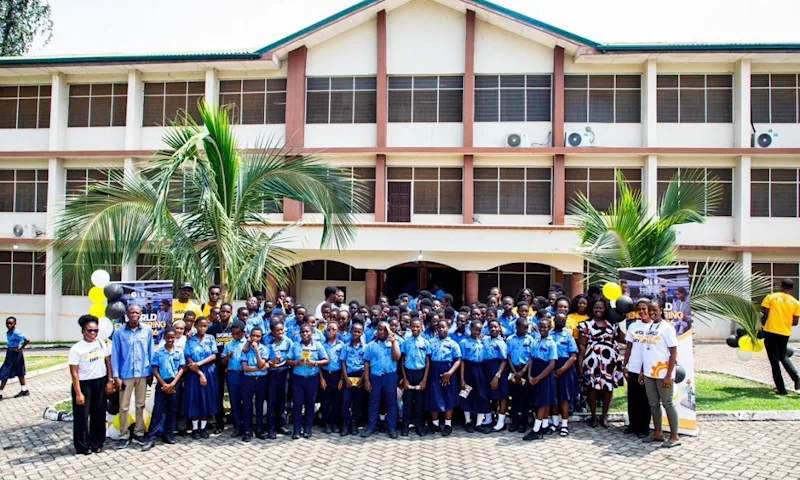
- The Spark Took. World Engineering Day (KNUST Basic School) We said we were going. We would walk into classrooms and disrupt every quiet lie that tells a young person the world of engineering is not for them. However we did not know what we would walk into. That was the honest truth of it. You can believe in young people in the abstract in their potential, their curiosity, their hunger and still hold your breath when the doors open and the belief has to hold up in an actual room. It held. Completely. - Before It Began, Someone Had to Build the Space A moment like this does not arrive fully formed. Someone has to care enough to build it. 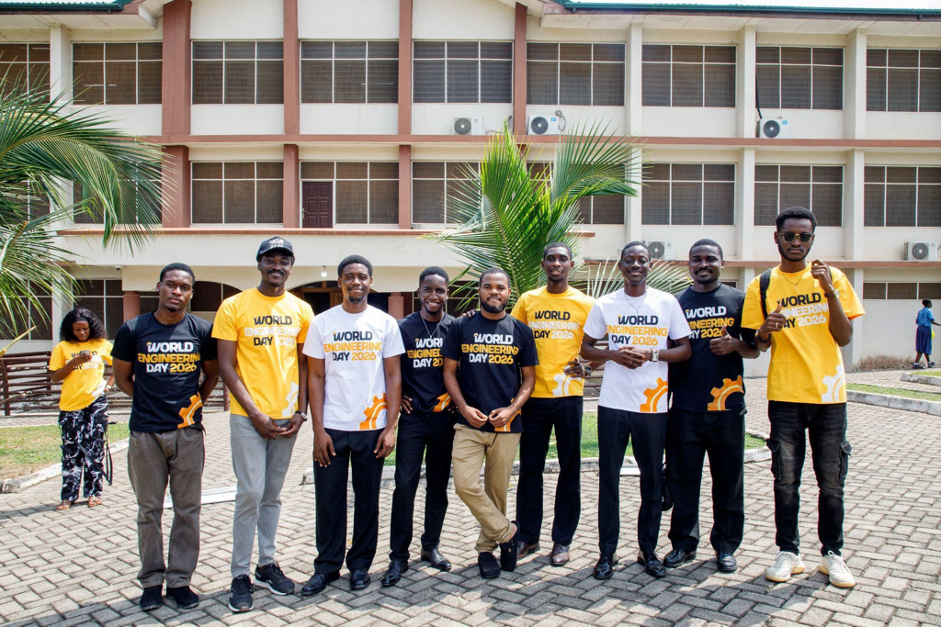 The organizers Frederick Agyekum, Oheneba Owusu, Marvin Adu Acheampong, Tracy Coleman, Prince Larbi, Ababio Alvin-James Nii Noi, Ken Kobina Dadzie, Christabel, Tracy Ofosu-Hemaa and Hackman were already moving before the students arrived, arranging, adjusting, making sure the room felt like it was ready to receive someone important. 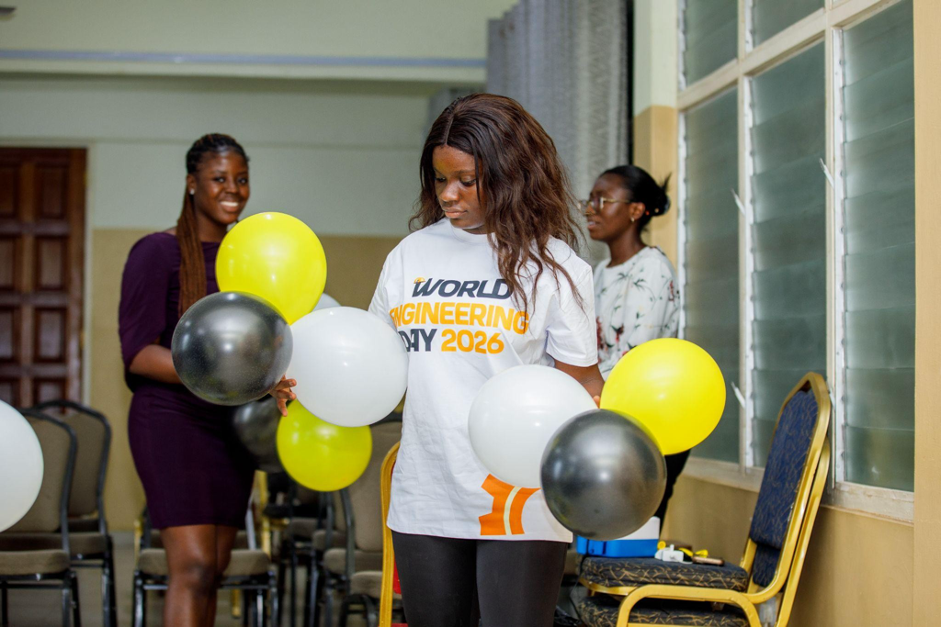 And among them, sleeves rolled up and fully present, was Stephen Owusu, President of the Ghana Engineering Students Association. 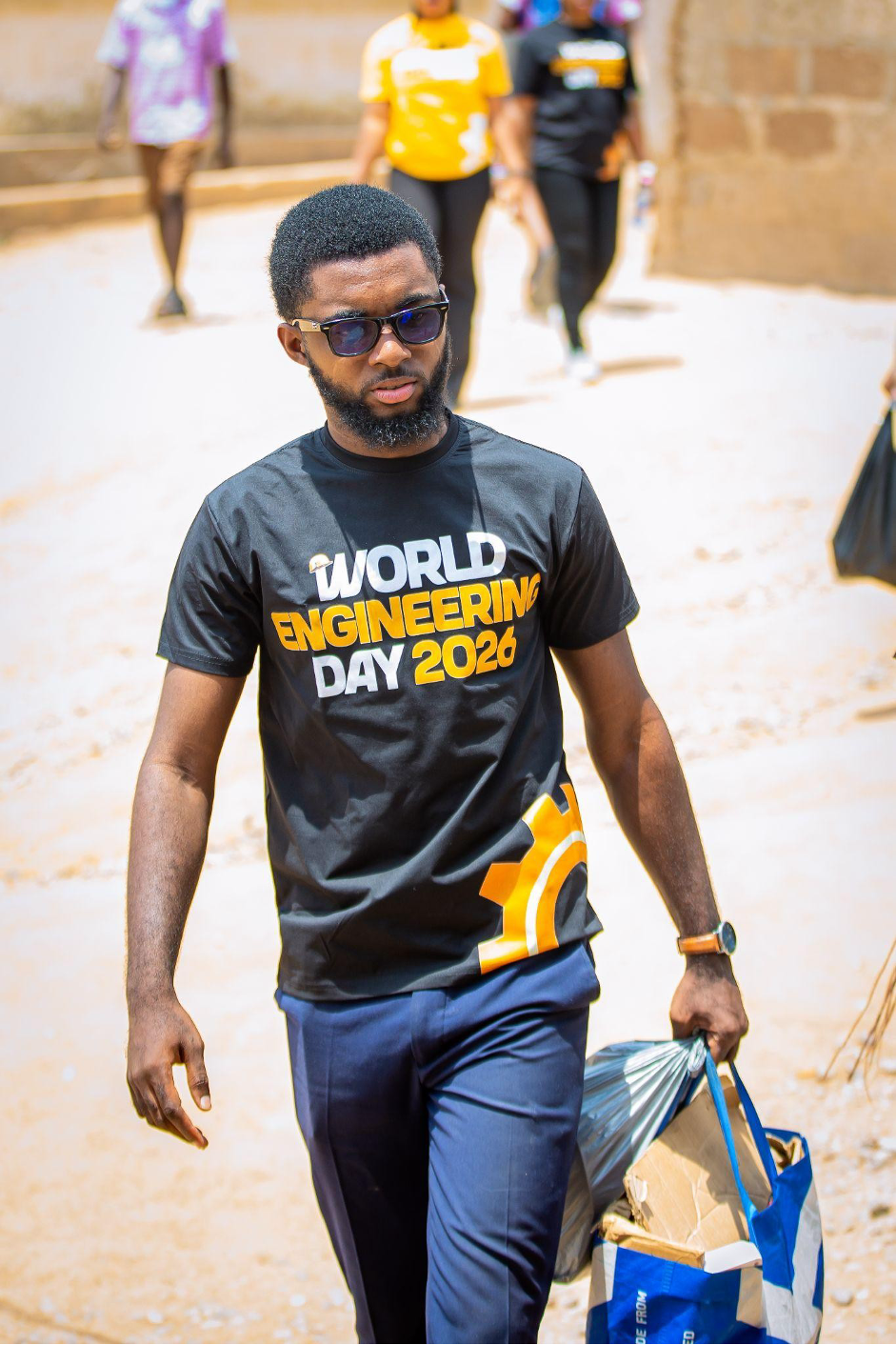 There is something worth saying about that. He did not arrive to be introduced and take his seat. He arrived to work doing what needed doing, without fanfare and without distance. Leadership, in that moment, looked like someone who had every reason to stand at the front of the room choosing instead to make sure the room was worthy of the people about to enter it. It set a tone before a single word had been spoken. And the team around him felt it. Because that is what the room was, not just a conference space. A carefully prepared invitation. The kind of environment that tells a young person, without a single word being spoken that someone thought about them before they walked through the door. It showed. The room was beautiful. And that was not an accident. - The Address That Set the Tone Before anything else, Dr. Eric Anokye spoke. 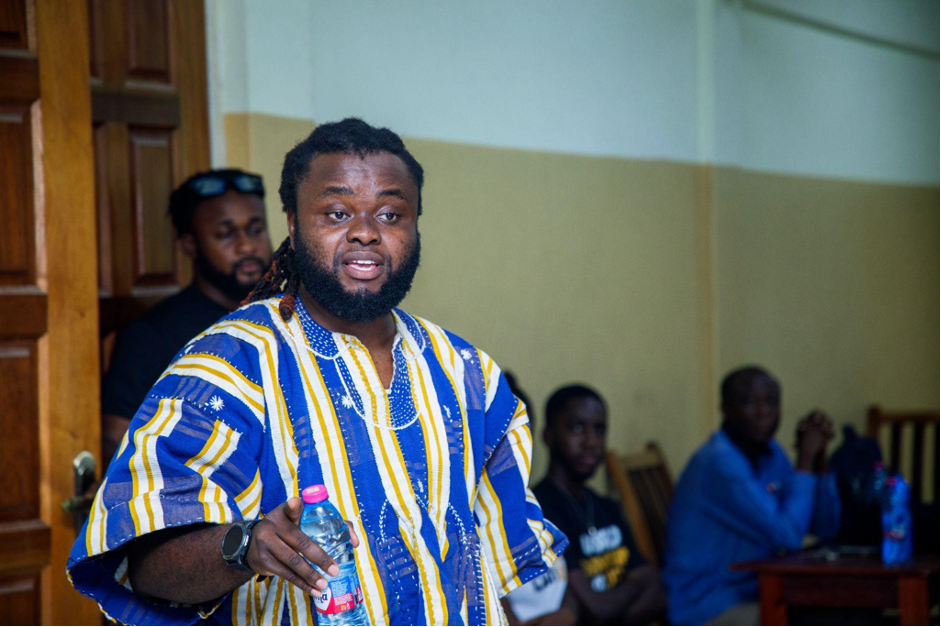 There was a stillness to how the room received him. Not the silence of an audience waiting for a speaker to finish but the kind that settles over people when they sense that what is being said is real, and the occasion it marks is serious. His opening address was formal without being distant, solemn without being cold. It named what the day actually was: not a visit, but a commitment. A declaration that the College of Engineering had chosen to extend itself; to cross whatever distance existed between institution and community and speak directly to the generation that would carry everything forward. By the time he finished, the room understood why it had gathered. The motion had been set. 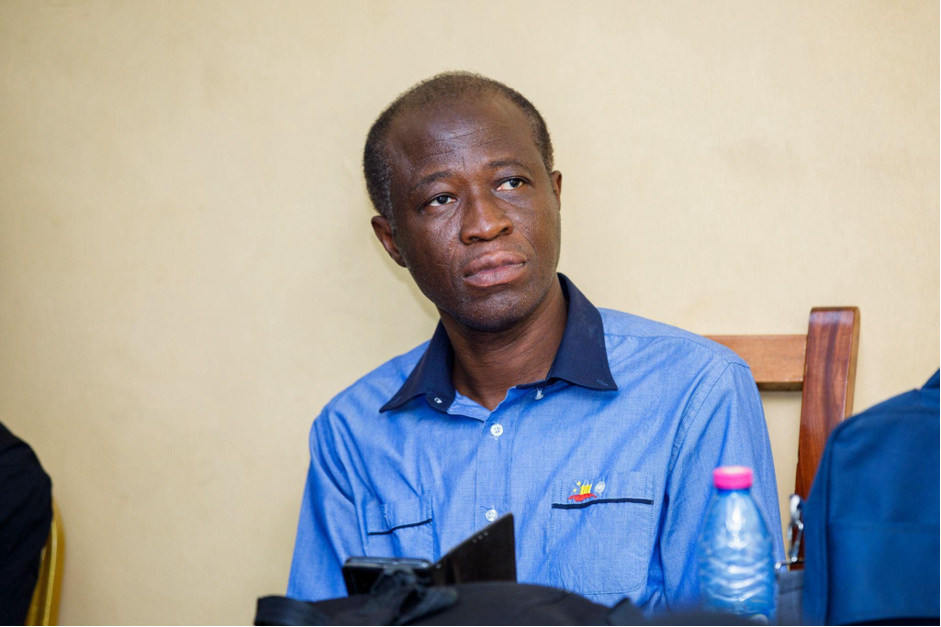 - A Presenter Who Felt Like a Peer When Daniel Tsatsu Selormey took the floor, something shifted. He did not stand at a distance and pour information downward. He moved through the material the way someone does when they genuinely want the person across from them to understand ;patient, direct, unhurried. There was something almost pastoral about it. A peer who had simply walked a little further down the road and was turning back to say: “come, it is worth it”. 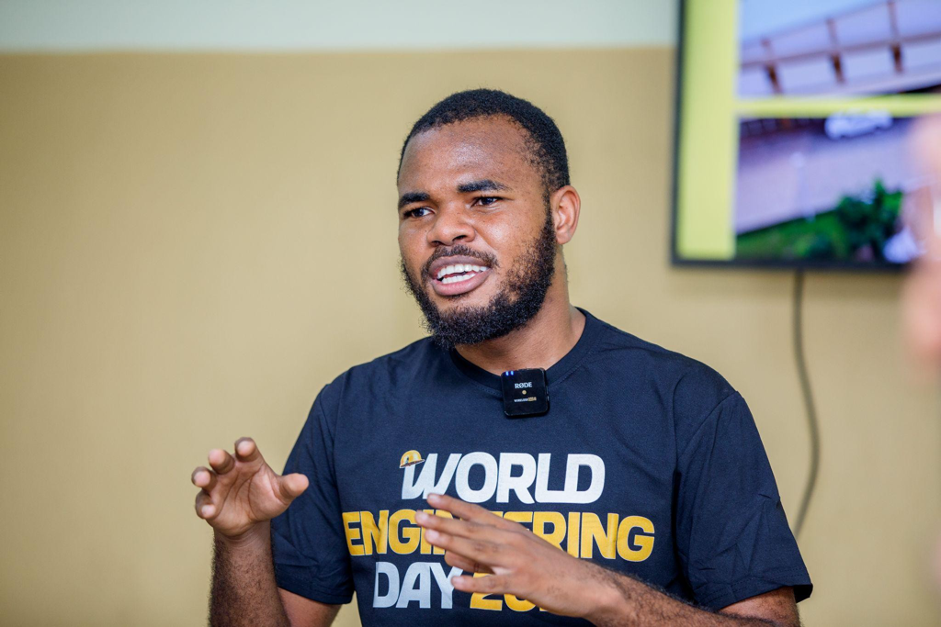 Every department he introduced became a conversation. Every question he posed to the room was met with hands in the air before he had finished asking it. - The Room Was Fully Alive And while all of that was happening at the front, the rest of the room had its own quiet choreography. Princess Mary-Ann Sampson Eduam and Miracle Hadassah B. N. Adams moved through the crowd with the kind of ease that only comes from genuine investment. They were not collecting responses they were listening. Catching the questions that didn’t quite make it to the microphone. Reading the room. Drawing out the student who had something to say but hadn’t yet decided it was worth saying. The feedback they gathered told its own story: question after question from young people who were, frankly, astonishing. The confidence was not what anyone had braced for. The intelligence behind the questions was not what anyone had quietly assumed they might find. 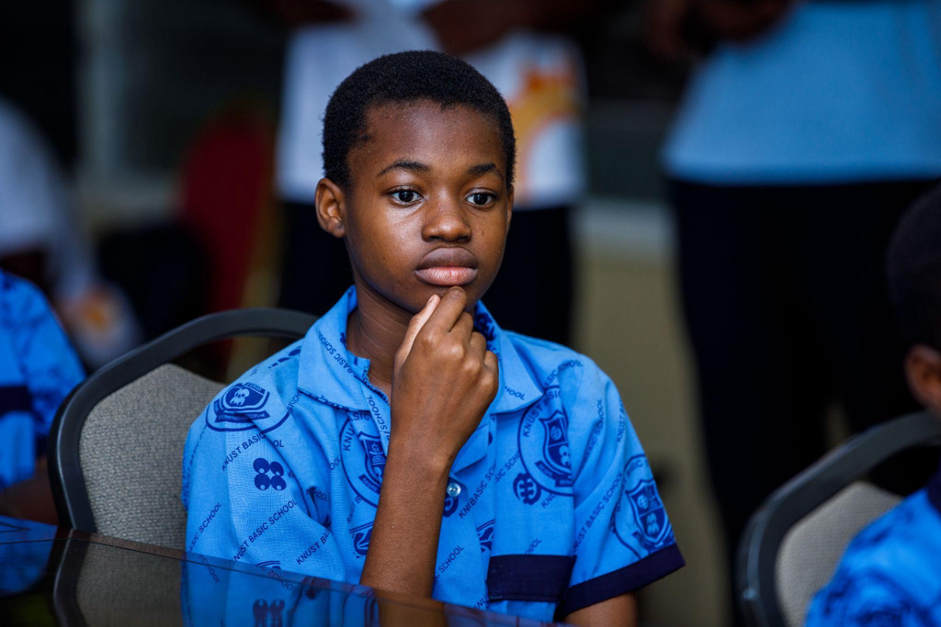 They were stopped, more than once, by what they heard. Woven through the entire programme were student representatives Victoria Owusu, Sedem Kwaku Bonsi, Gah Solace Semenyo from the various engineering faculties and their presence said something that no slide could. They were not there as decoration. They were there as proof. Young people, not far removed in age from the students sitting in front of them, who had made the choice and were living it. 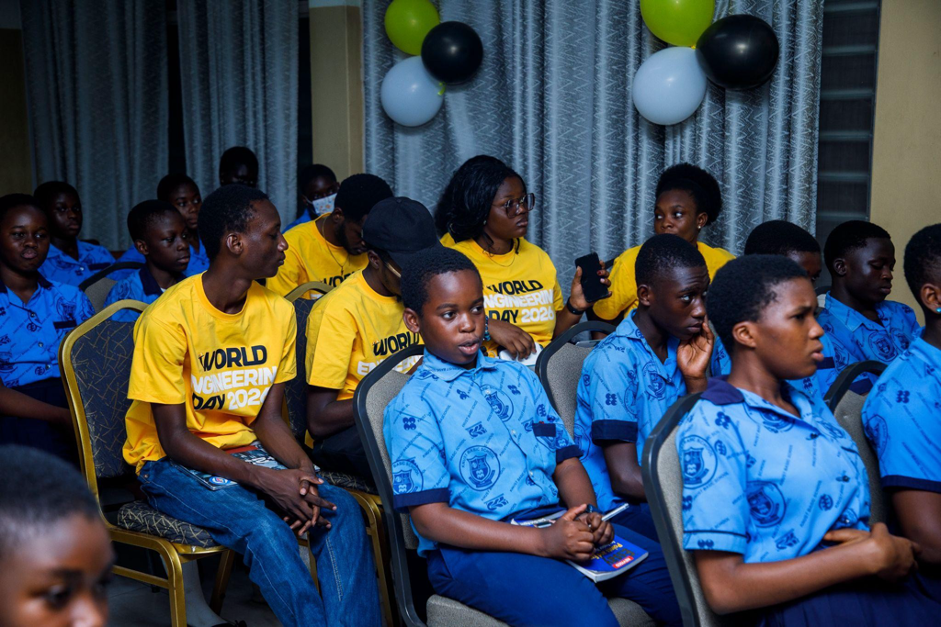 During the Q&A session mediated by Mrs Afia Kesewaa Akosah, the lecturers Dr Eric Anokye and Dr Emmanuella Kwao, and engineering students Stephanie Adwoa Konadu and Nana Kwame Oppong Antwi and Princess Mary-Ann moved through the Q&A the same way, not performing answers, but giving them. Taking the questions seriously. Meeting curiosity with honesty. There is a particular relief a young person feels when the adult in the room does not talk around their question, and it was visible on faces throughout that session. Shoulders dropping. Eyes widening. 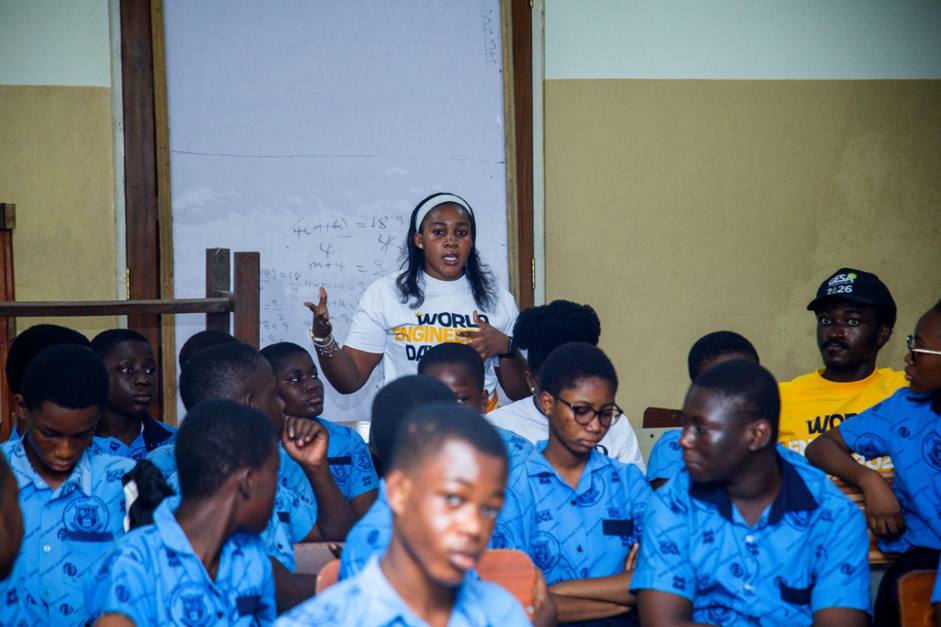 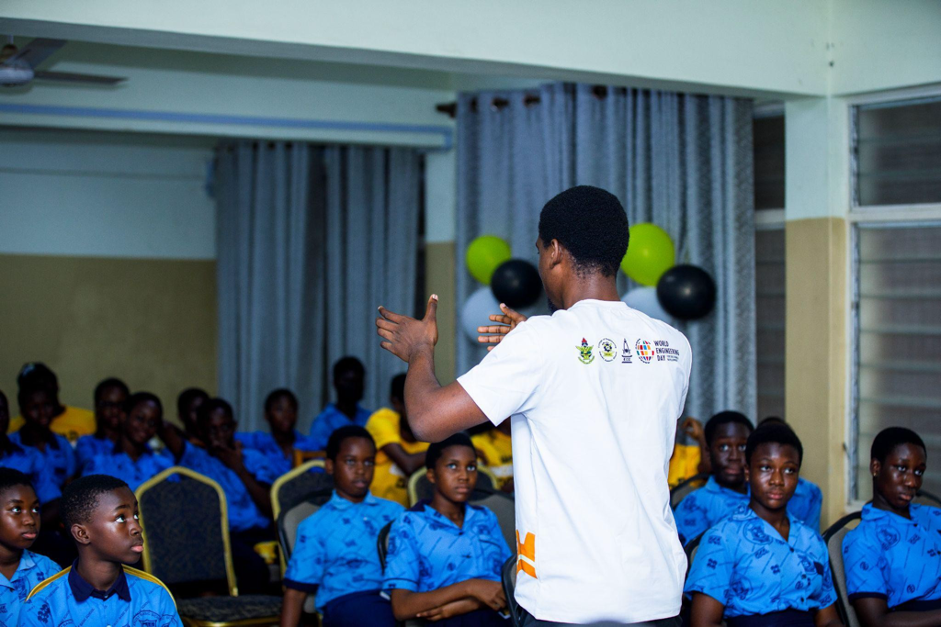 And through all of it, the photography and videography team, Gabriel Awinzo and Korankye Cross moved like shadows; present everywhere, obtrusive nowhere. Catching a smile at the exact moment it broke. A hand raised mid-thought. A student leaning forward in their seat, completely absorbed. The reactions that tell the real story of a room: the ones nobody performs because nobody knows they’re being seen. 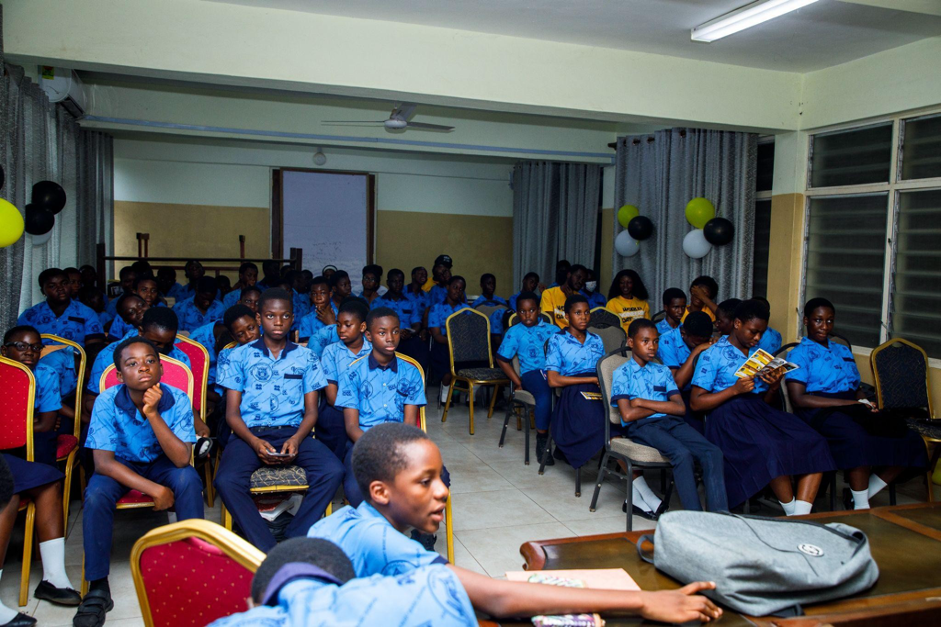 - How It Ended The programme was brought to a close by Dr. Emmanuella Kwao, and her closing words carried the weight of everything the day had been building toward. 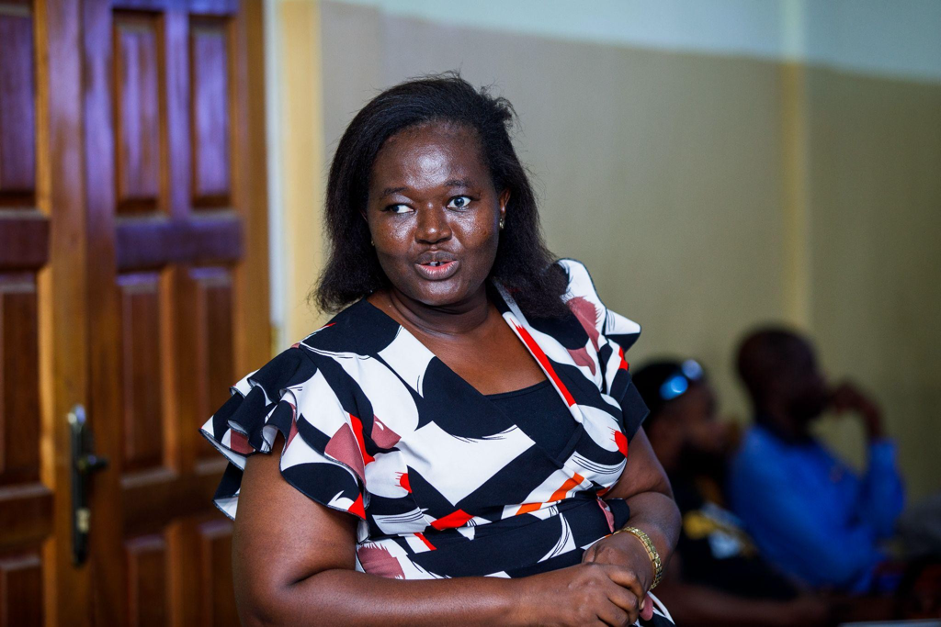 She reminded the students that engineering does not exist in silos. That in the real world, no discipline stands alone. That the greatest solutions; the ones that move communities, that save lives, that build the infrastructure of a nation, are always the product of multiple fields working together. And then she told them, with warmth and without hesitation, that she hoped to see them in the world of engineering. It was not a pleasantry. It was a challenge. And the students received it as one. 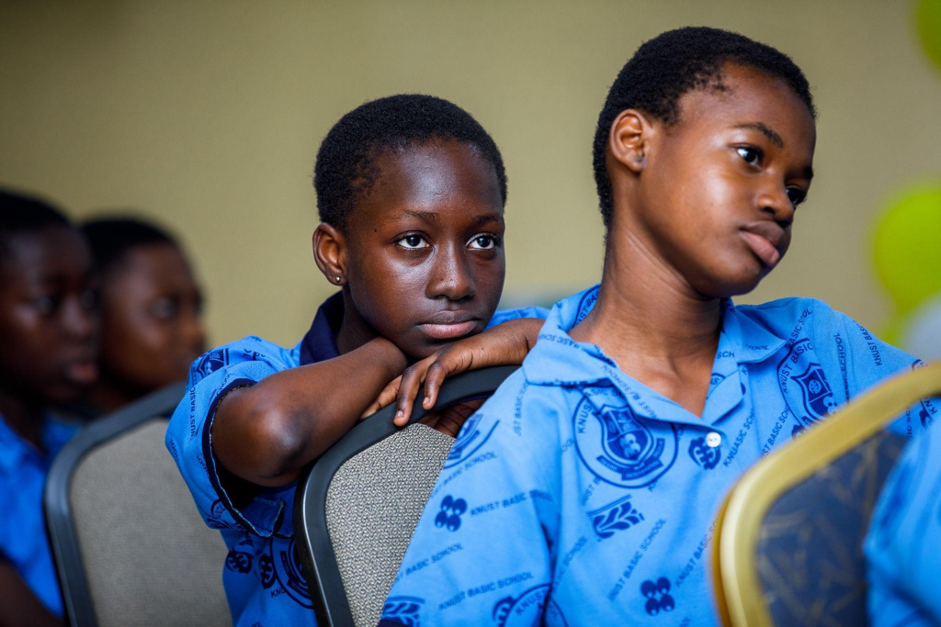 Because as the formal session drew to a close, the VR team, Cyril Otchere and Nana Kwame Oppong Antwi stepped in and what happened next was something else entirely. One by one, the students put on the headsets. And one by one, they were lifted out of that conference room and set down inside the College of Engineering at KNUST. 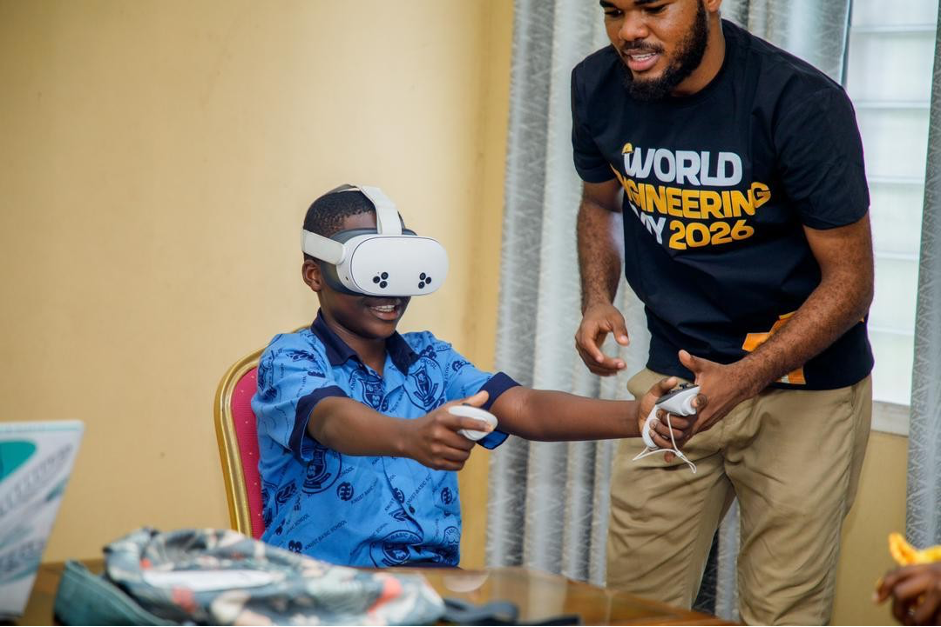 They walked its spaces virtually. Saw its laboratories, its grounds, its buildings, the place that had been spoken about all morning as somewhere they could go, made suddenly, viscerally real. Some of them went quiet. Others laughed. A few reached out instinctively, as if they could touch what they were seeing. It was the right note to end on. Not inspiration in the abstract. But the actual feeling of being somewhere of standing, even briefly and virtually, inside the future being described for them. That is what wonder looks like when it lands. - What the Day Proved There is an assumption quietly embedded in outreach work: that something must be given before anything can grow. That young people arrive as empty vessels and leave as something more. KNUST Basic School refused that story. 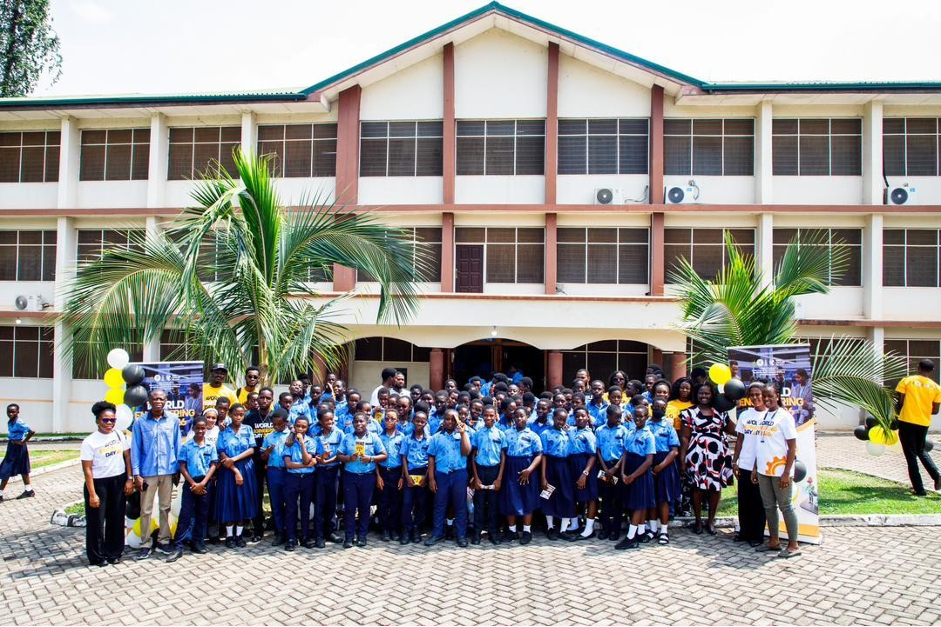 The students there did not need to be convinced that they were capable. They needed to be met seriously, fully, in a space that had been thoughtfully prepared for them, by people who showed up not as authorities but as evidence. Evidence that the path exists and that it runs, without question, through people who look exactly like them. GESA, KEEP, WinE, and every person who played a role that day from the organizers who built the room to the team who captured every moment in it offered that evidence freely. 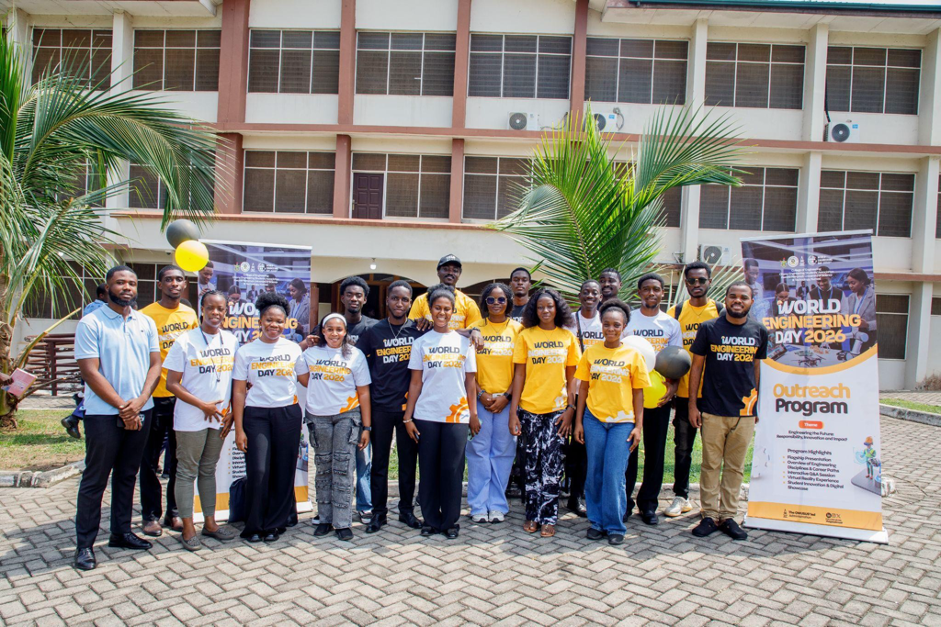 The next generation of Ghanaian engineers is not coming. They are already here. Someone just has to keep showing up. - TO GOD BE THE GLORY Plans were made. Teams were assembled. A room was prepared. People showed up and gave everything they had. But those of us who were there know that what unfolded went beyond what any plan could have guaranteed. The way the day held together, from the first word of Dr. Anokye’s address to the last moment of wonder at the close. None of that was ours to manufacture. All glory, for every bit of it, belongs to God. It was His hand that made the room what it was, His grace that moved through every person who served that day, and His purpose being worked out in the lives of every young mind that left that school carrying something new. We planted. We watered. But it is God who gives the growth and for that, we are grateful beyond what words properly allow. 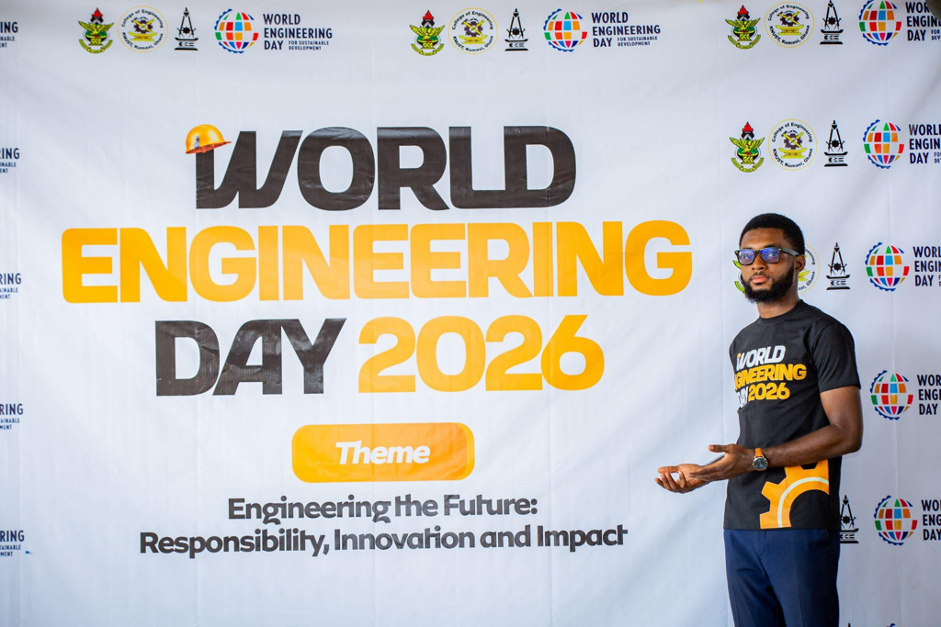 To learn more about GESA outreach programmes or get involved, contact the College of Engineering Student Affairs Office
March 4, 2026
THE HEART BEHIND THE OUTREACH - Why We Are Walking Into Those Classrooms Today Right now, across five schools, young people are sitting in classrooms who do not yet know what they are capable of. They do not yet see that the road beneath their feet, the phone that connects their world, the clean water flowing from their taps — all are gifts of engineering. They do not yet know that every bridge, every signal, every spark of modern life exists because someone, somewhere, chose to become an engineer. Today, we step into those classrooms to awaken that realisation. This World Engineering Day, the College of Engineering at KNUST is stepping beyond its walls. As one of the leading engineering institutions in Ghana, and the foundation upon which many of this nation’s engineering solutions have been built, we recognise something important: Leadership is not only about what you build. It is about who you raise. For decades, engineers trained at Kwame Nkrumah University of Science and Technology have shaped Ghana’s infrastructure, powered industries, advanced technology, and designed the systems that keep this country moving. From bridges and highways to water systems and renewable energy solutions, our fingerprints are embedded in the development of this nation. And now the time has come for this legacy to go beyond laboratories and lecture halls. We are not waiting for the next generation to find their way to us. We are going to them, to their schools, their world, because we believe the most powerful thing we can offer a young mind is not a textbook, not a formula, not even a scholarship. It is a vision. A picture of themselves, not as they are now, but as they could be. - Why This Matters More Than We Can Say Many young people in these schools are exceptionally talented, yet unaware of their own potential. They’ve been told that science is difficult, that engineering is only for certain people, and that their dreams are unrealistic. We are going to walk in and disrupt every one of those lies. We are going because representation is not a buzzword — it is a lifeline. A child who has never seen an engineer cannot dream of becoming one. A girl who has only heard that engineering is for boys will silence herself before she even begins. A boy from a rural community who has never met a university student will assume the path to one does not run through him. We are going to change that; one classroom, one conversation, one "I never thought of it that way" moment at a time. - What We Are Carrying Into Those Schools We are not going with lectures. We are not going to overwhelm them with equations or intimidate them with jargon. We are going with stories. Our own stories. Stories of students who once sat exactly where they are sitting, uncertain, full of questions they were afraid to ask, and found their way to KNUST, to engineering, to a life of building things that matter. We are going with wonder. We want them to feel what it is like to hold a model bridge and understand why it does not fall. To see a circuit light up. To trace the path that clean water travels from a treatment plant to their cup. To realise that all of this is the work of human hands guided by human minds that were trained to solve problems. And we are going with a simple, powerful message: Ghana needs you to be that engineer. - The Fire We Want to Set And the Call to Others Think back to the moment you first fell in love with engineering. For some of us, it was a teacher. For others, it was a broken radio that we could not resist taking apart. For others still, it was the sight of a building rising from nothing, and the quiet voice inside that said: I want to do that. That moment did not happen by accident. Something or someone put it there. Today, we are walking into those schools to be that something for the next generation. We are going to light fires. We do not know whose fire will burn the longest, whose will eventually build the bridge that connects a community, design the solar grid that powers a hospital, or engineer the water system that saves a thousand lives. But we know the fire has to start somewhere. And it starts today. To every engineering student, association, institution, and professional watching this unfold, this is your invitation. You do not need a grand programme or a large budget. You need time, heart, and the courage to walk into a classroom and say: I am an engineer, and you could be one too. Imagine if every engineering institution in Ghana did this. Imagine if World Engineering Day became the day schools across the country threw open their doors and engineers walked in. Imagine the shift; not in years, but in decades — as a generation of engineers who were sparked this way grows up and builds the Ghana we all know is possible. That is not a dream. That is a plan. And it begins with five schools. We are going today. We do not know exactly what we will find in those classrooms. But we know what we are bringing: A spark. And the belief that it is enough to change everything. Building Ghana. Building Africa. Building the Future. 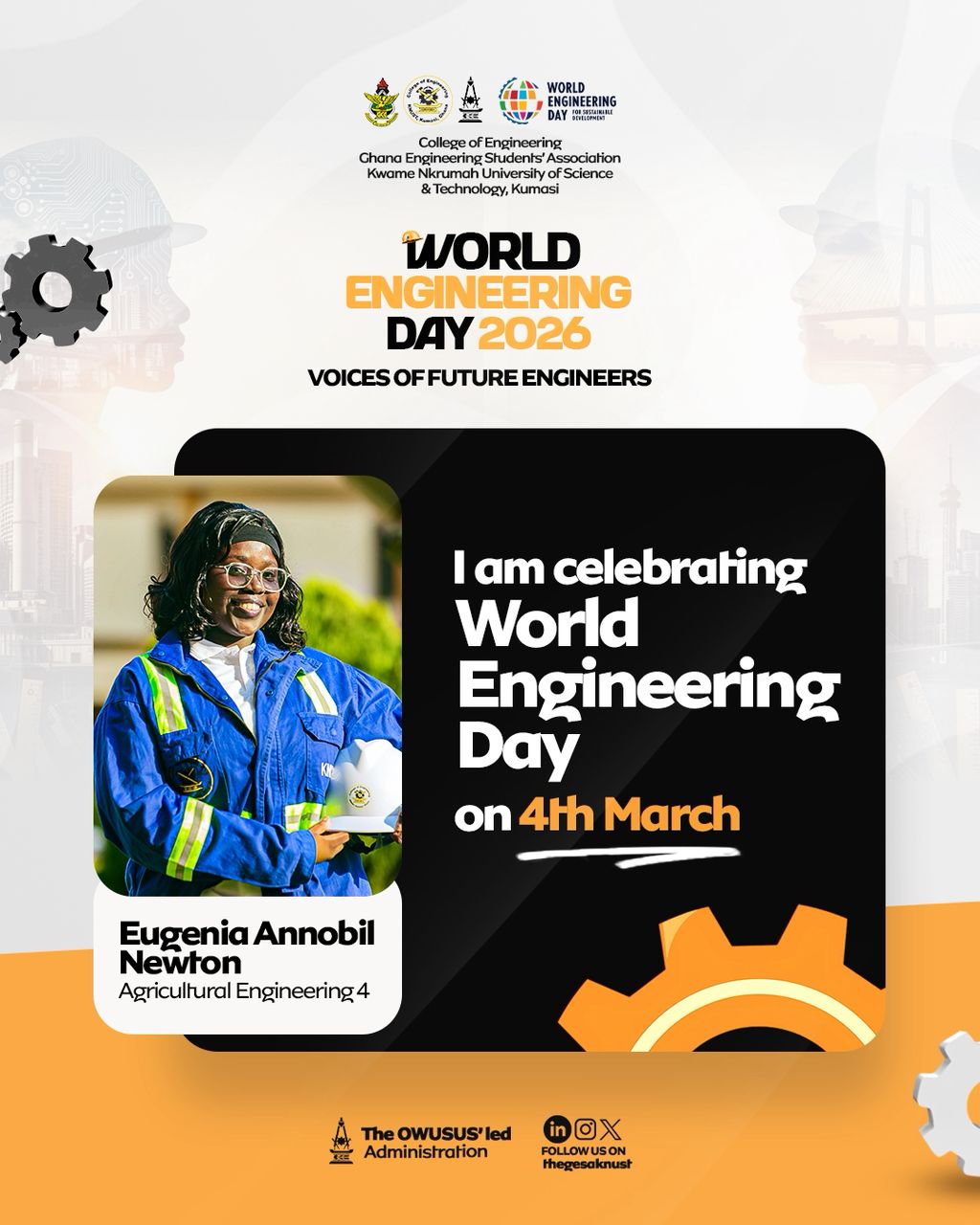 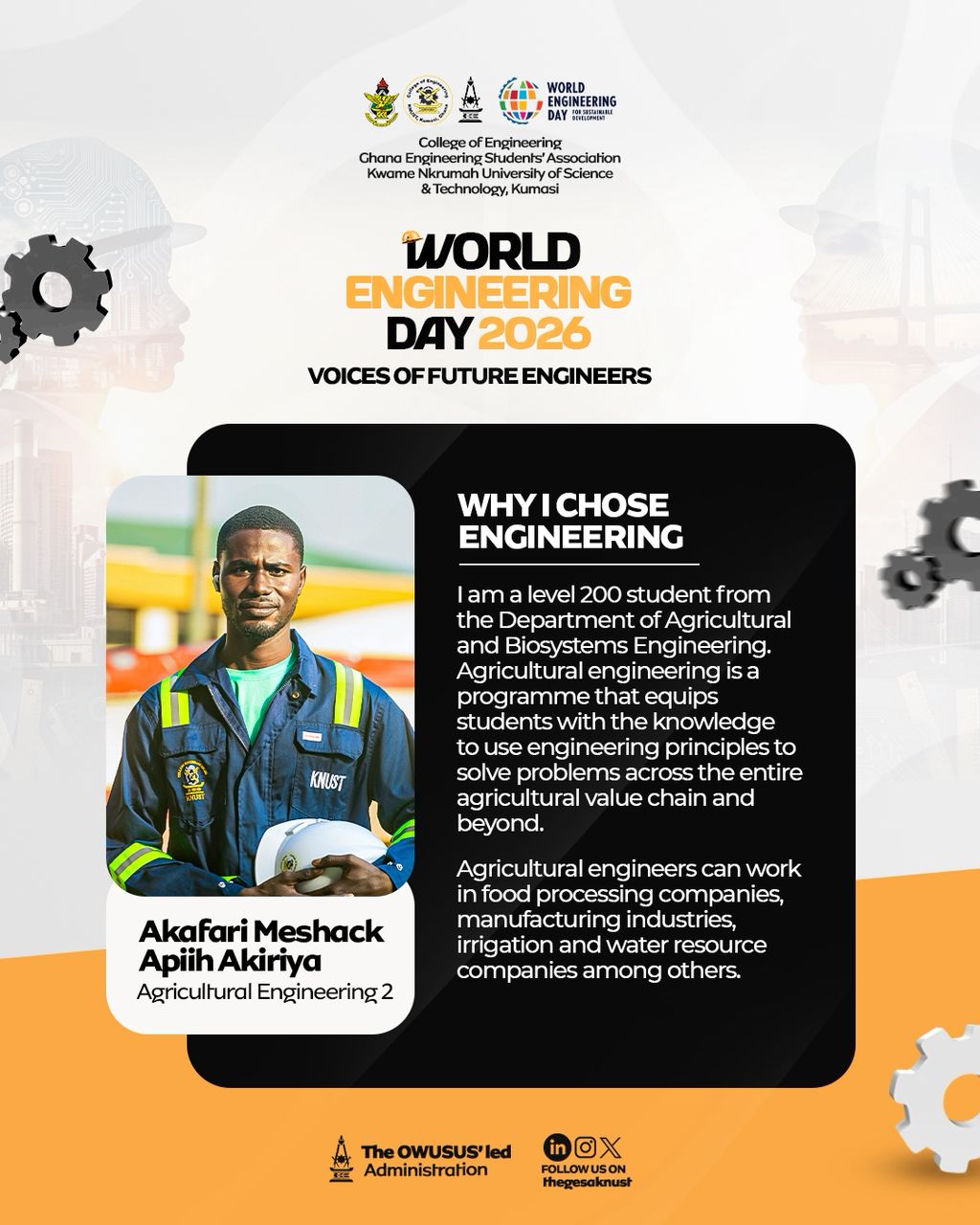  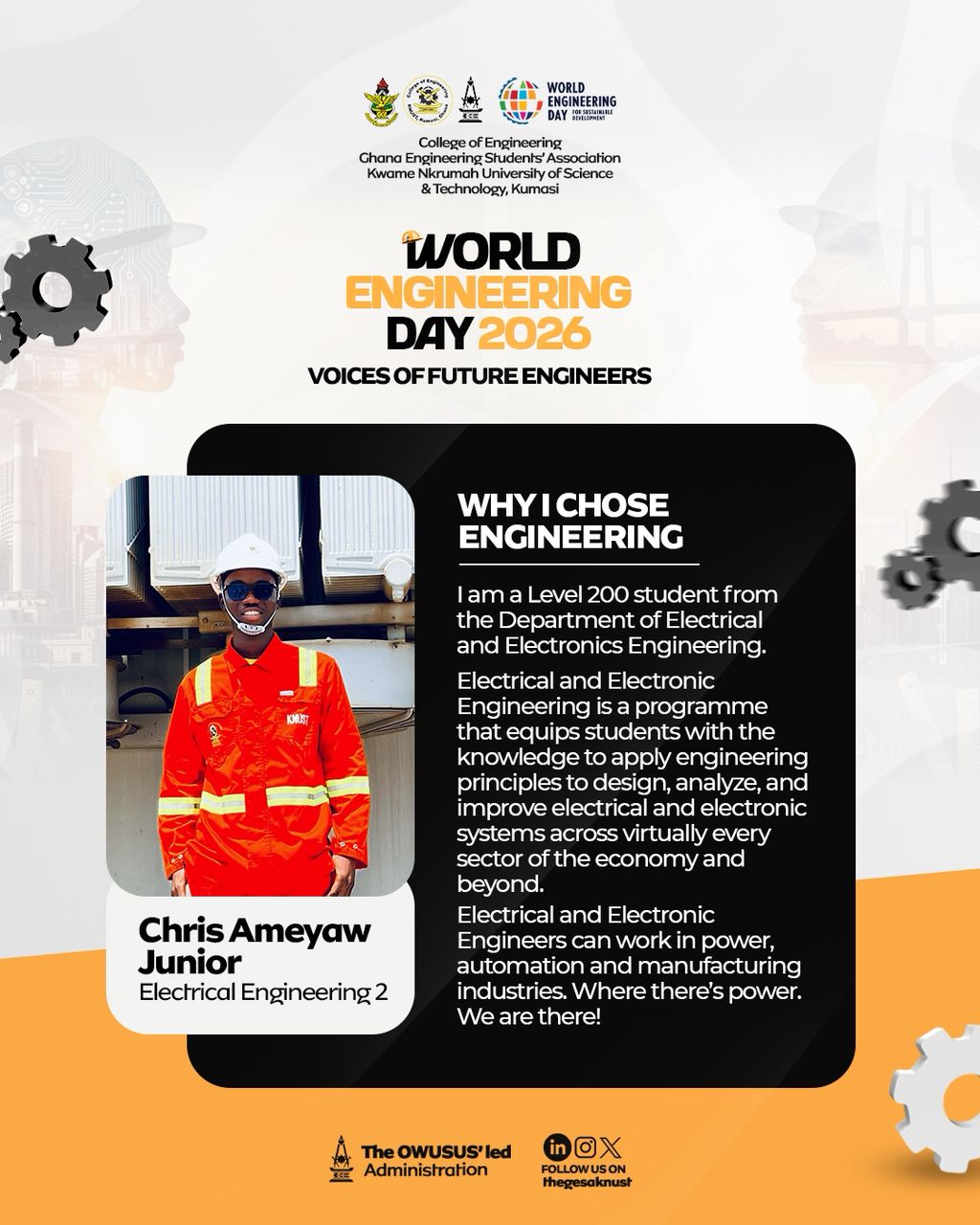
March 4, 2026
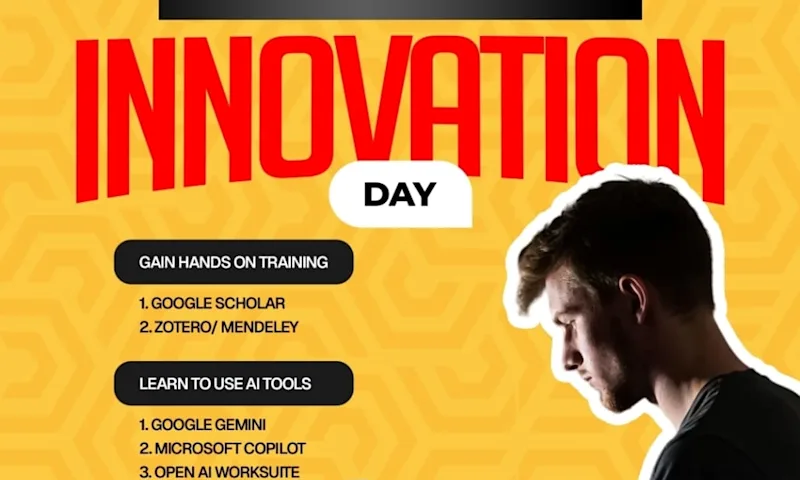
Unlock Your Research Potential with Hands-On AI & Tools Mastery. Theme : Empowering Tomorrow’s Engineers to master research tools and AI for Innovation. Venue : VSLA What to Expect: Hands-On, practical, transformative training to gain mastery in powerful research tools such as: - Google Scholar - Zotero / Mendeley - Google Gemini - Microsoft Copilot - OpenAI WorkSuite Please remember to come along with your laptop (highly recommended for maximum benefit), notebook, and your hunger to learn. Together, let’s turn research from a task into a superpower.
February 28, 2026
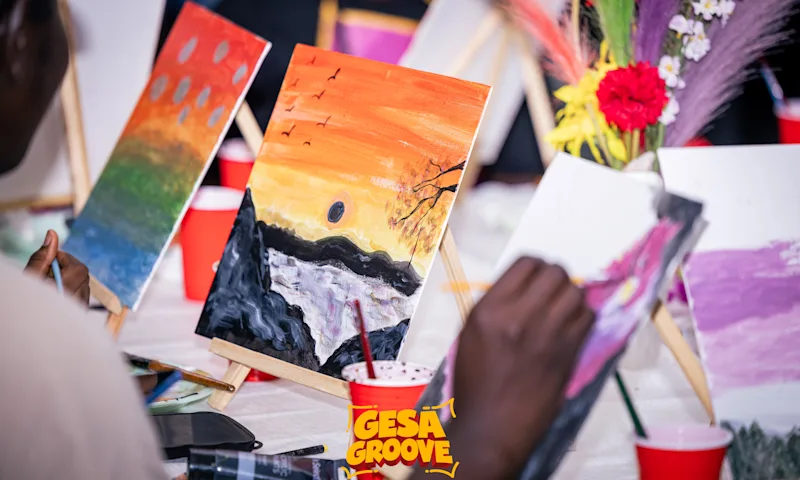
Freshers, this was your moment. Games. Fun. Competition. Vibes. Laughter. Memories. From FIFA tournaments to board games, Jenga, sip & paint, virtual reality and more; it was all about bonding, unwinding, and grooving the GESA way. There was a free photoshoot as well.
January 17, 2026
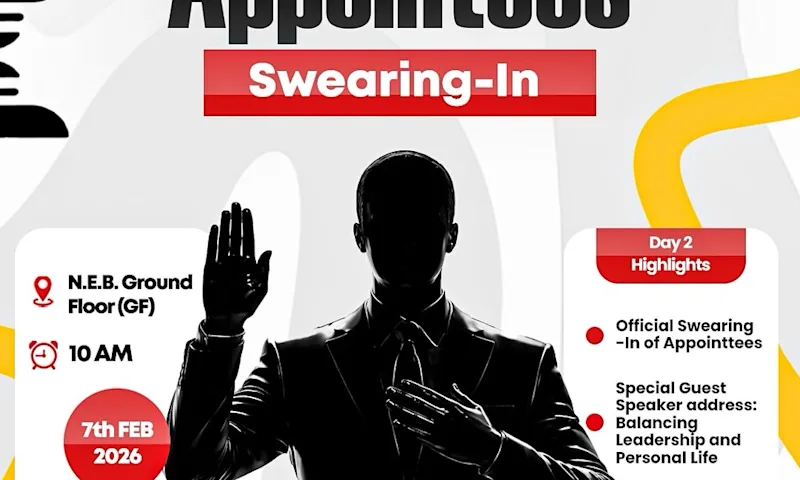
The GESA Appointee Swearing-In Ceremony was held on Saturday, 7th February 2026 at 10:00 AM prompt at the NEB Ground Floor. The ceremony formally inducted appointed members into leadership, marking the official commencement of their responsibilities and commitment to service within GESA.
February 7, 2026

The GESA Leadership Conference & Development Workshop took place on Friday, 6th February 2026 at 1:00 PM prompt at the KNUST Library Mall Conference Room. The session equipped appointed student leaders with essential leadership skills, clarity of vision, and the mindset required for effective and impactful service.
February 6, 2026

The KNUST Financial Literacy & Empowerment Conference brought together institutional leaders, policymakers, industry professionals, and students for focused dialogue and actionable learning.
January 24, 2026
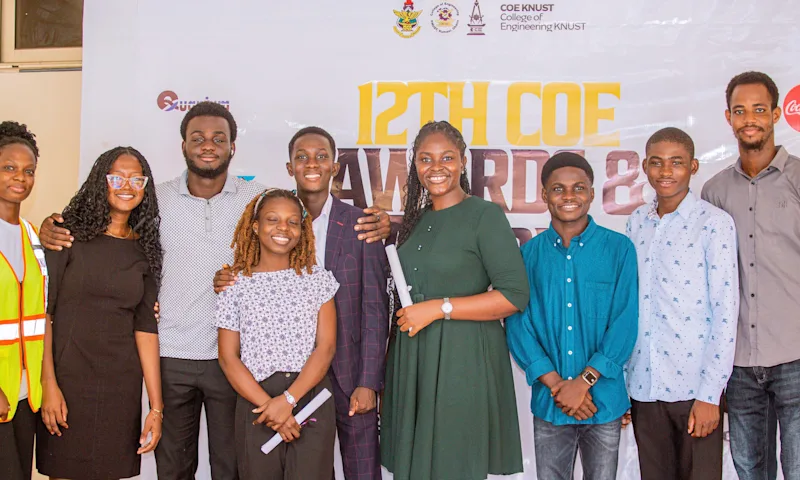
The 12th KNUST College of Engineering Awards and Career Fair honored outstanding student achievements and strengthened industry–academia partnerships, serving as a platform for career exploration and professional growth.
June 4, 2025
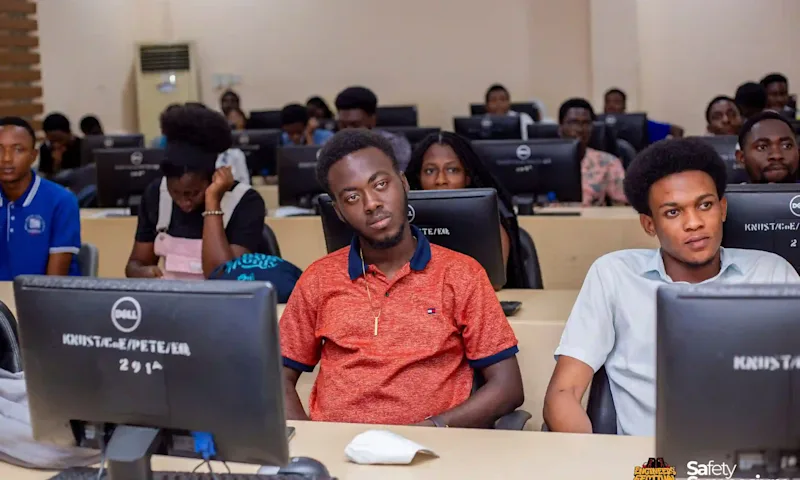
The Safety Symposium brought together experts and participants to discuss safety awareness, risk prevention, and responsible practices across various fields.
July 30, 2025
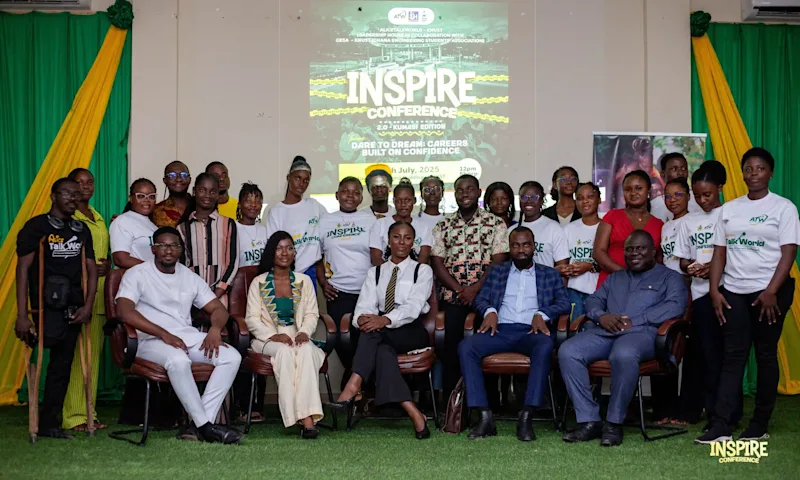
INSPIRE Conference 2.0 brought voices, stories, and purpose together, sparking reflection, renewed direction, and bold confidence.
July 25, 2025
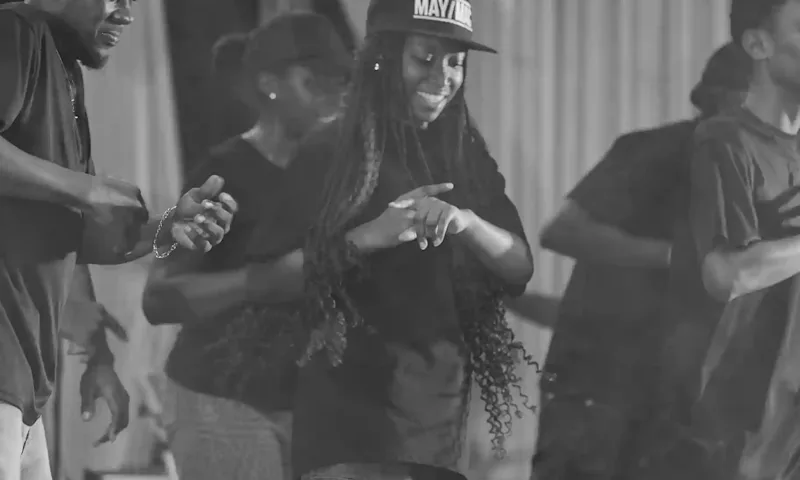
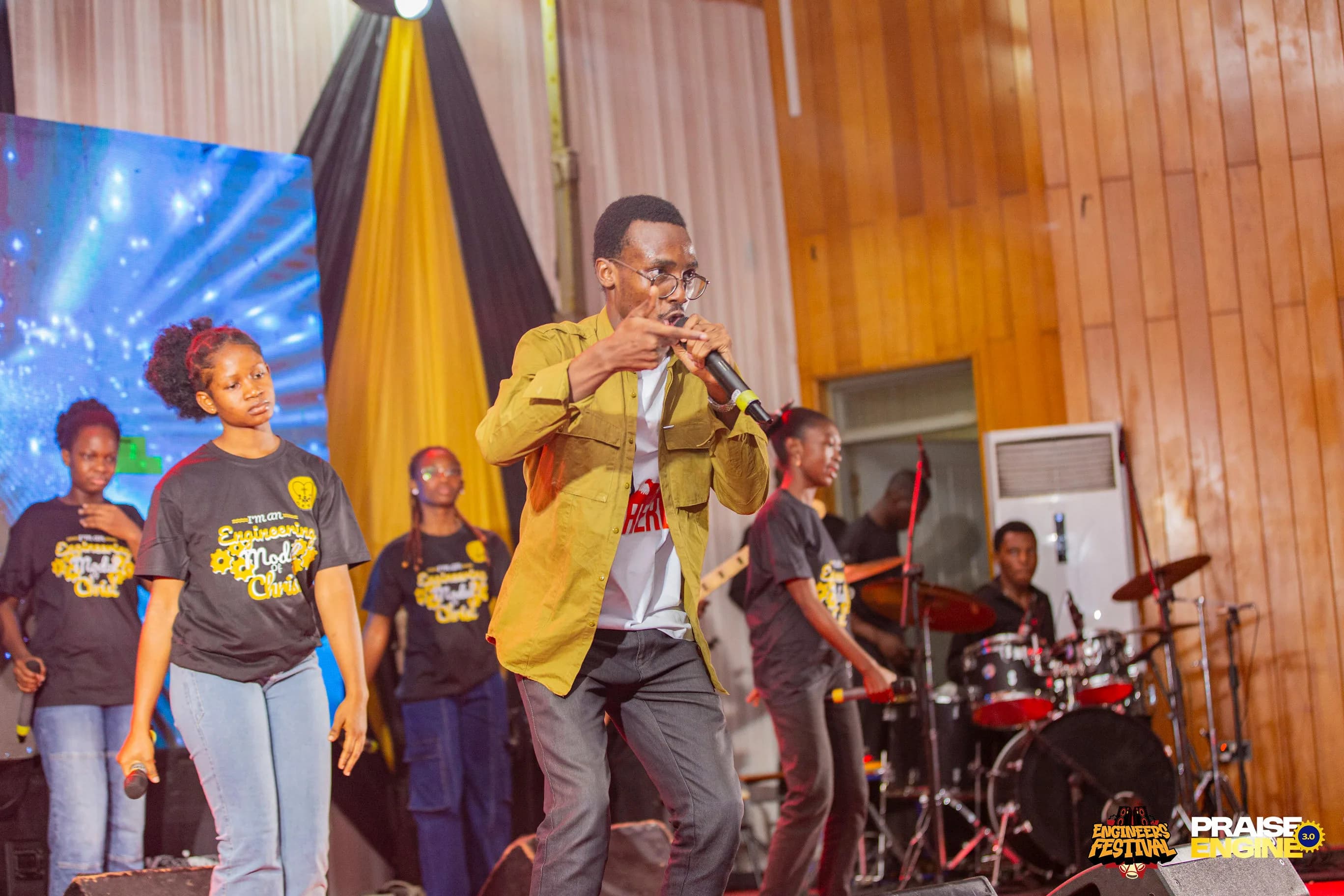
Praise Engine 3.0 was a powerful gathering of worship, praise, and thanksgiving, drawing hearts together in reverence under the theme “The Coming King.”
July 27, 2025
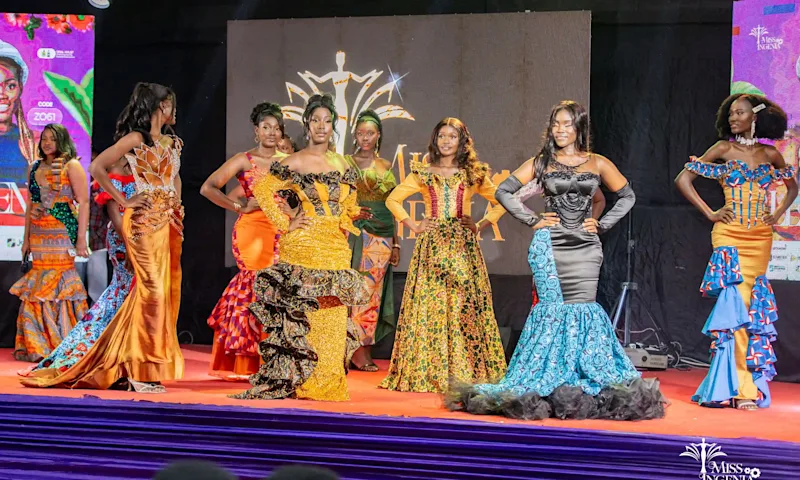
Miss Ingenia 2025 was a powerful showcase of brains, beauty, and bold ideas among female engineering students.
August 10, 2025

Students embarked on an outreach to King Jesus Charity Home to donate food, clothing, and other items to the children. A day filled with care, joy, and hope.
December 19, 2025
Explore insights, innovations, and student experiences from the heart of KNUST’s engineering community.
𝗧𝗵𝗲 𝗦𝘁𝗮𝗴𝗲 𝗪𝗮𝘀 𝗦𝗲𝘁. 𝗧𝗵𝗲 𝗪𝗼𝗿𝗱𝘀 𝗪𝗲𝗿𝗲 𝗥𝗲𝗮𝗱𝘆. 🎤✍️ Pendown Challenge 3.0 just wrapped up, and what an experience it was. Over three electrifying days, students from across the college came together to compete, learn, and express themselves through debate, public speaking, and spoken word. Starting from the faculty level, teams were groomed, selected, and tested before stepping onto the big stage. The preliminary and semi-final debate rounds on Wednesday and Thursday were intense — eight teams, sharp arguments, and no room for mediocrity. Friday's main event brought it all together: a communication and public speaking seminar, breathtaking spoken word performances, a public speaking competition, and the grand championship debate. In the end, excellence found its names: 🏆 Debate Winners: FCGESA Team 2 🎙️ Public Speaking Winner: Elvis Aboagye Asante But beyond the trophies, Pendown Challenge 3.0 was a reminder that the ability to think critically and speak boldly is one of the most powerful tools a student can carry into the world. Congratulations to every participant, judge, spoken word artist for giving of their best. A special thank you to our sponsors Intelligent Building Solutions HQ, and The Torah Group Of Companies for making this possible and the general secretary committee who made this possible. 👏 To the winners — the bar has been raised. 🔥 #PendownChallenge #GESA #StudentExcellence #PublicSpeaking #Debate #SpokenWord #KNUST
March 27, 2026
- The Spark Took. World Engineering Day (KNUST Basic School) We said we were going. We would walk into classrooms and disrupt every quiet lie that tells a young person the world of engineering is not for them. However we did not know what we would walk into. That was the honest truth of it. You can believe in young people in the abstract in their potential, their curiosity, their hunger and still hold your breath when the doors open and the belief has to hold up in an actual room. It held. Completely. - Before It Began, Someone Had to Build the Space A moment like this does not arrive fully formed. Someone has to care enough to build it.  The organizers Frederick Agyekum, Oheneba Owusu, Marvin Adu Acheampong, Tracy Coleman, Prince Larbi, Ababio Alvin-James Nii Noi, Ken Kobina Dadzie, Christabel, Tracy Ofosu-Hemaa and Hackman were already moving before the students arrived, arranging, adjusting, making sure the room felt like it was ready to receive someone important.  And among them, sleeves rolled up and fully present, was Stephen Owusu, President of the Ghana Engineering Students Association.  There is something worth saying about that. He did not arrive to be introduced and take his seat. He arrived to work doing what needed doing, without fanfare and without distance. Leadership, in that moment, looked like someone who had every reason to stand at the front of the room choosing instead to make sure the room was worthy of the people about to enter it. It set a tone before a single word had been spoken. And the team around him felt it. Because that is what the room was, not just a conference space. A carefully prepared invitation. The kind of environment that tells a young person, without a single word being spoken that someone thought about them before they walked through the door. It showed. The room was beautiful. And that was not an accident. - The Address That Set the Tone Before anything else, Dr. Eric Anokye spoke.  There was a stillness to how the room received him. Not the silence of an audience waiting for a speaker to finish but the kind that settles over people when they sense that what is being said is real, and the occasion it marks is serious. His opening address was formal without being distant, solemn without being cold. It named what the day actually was: not a visit, but a commitment. A declaration that the College of Engineering had chosen to extend itself; to cross whatever distance existed between institution and community and speak directly to the generation that would carry everything forward. By the time he finished, the room understood why it had gathered. The motion had been set.  - A Presenter Who Felt Like a Peer When Daniel Tsatsu Selormey took the floor, something shifted. He did not stand at a distance and pour information downward. He moved through the material the way someone does when they genuinely want the person across from them to understand ;patient, direct, unhurried. There was something almost pastoral about it. A peer who had simply walked a little further down the road and was turning back to say: “come, it is worth it”.  Every department he introduced became a conversation. Every question he posed to the room was met with hands in the air before he had finished asking it. - The Room Was Fully Alive And while all of that was happening at the front, the rest of the room had its own quiet choreography. Princess Mary-Ann Sampson Eduam and Miracle Hadassah B. N. Adams moved through the crowd with the kind of ease that only comes from genuine investment. They were not collecting responses they were listening. Catching the questions that didn’t quite make it to the microphone. Reading the room. Drawing out the student who had something to say but hadn’t yet decided it was worth saying. The feedback they gathered told its own story: question after question from young people who were, frankly, astonishing. The confidence was not what anyone had braced for. The intelligence behind the questions was not what anyone had quietly assumed they might find.  They were stopped, more than once, by what they heard. Woven through the entire programme were student representatives Victoria Owusu, Sedem Kwaku Bonsi, Gah Solace Semenyo from the various engineering faculties and their presence said something that no slide could. They were not there as decoration. They were there as proof. Young people, not far removed in age from the students sitting in front of them, who had made the choice and were living it.  During the Q&A session mediated by Mrs Afia Kesewaa Akosah, the lecturers Dr Eric Anokye and Dr Emmanuella Kwao, and engineering students Stephanie Adwoa Konadu and Nana Kwame Oppong Antwi and Princess Mary-Ann moved through the Q&A the same way, not performing answers, but giving them. Taking the questions seriously. Meeting curiosity with honesty. There is a particular relief a young person feels when the adult in the room does not talk around their question, and it was visible on faces throughout that session. Shoulders dropping. Eyes widening.   And through all of it, the photography and videography team, Gabriel Awinzo and Korankye Cross moved like shadows; present everywhere, obtrusive nowhere. Catching a smile at the exact moment it broke. A hand raised mid-thought. A student leaning forward in their seat, completely absorbed. The reactions that tell the real story of a room: the ones nobody performs because nobody knows they’re being seen.  - How It Ended The programme was brought to a close by Dr. Emmanuella Kwao, and her closing words carried the weight of everything the day had been building toward.  She reminded the students that engineering does not exist in silos. That in the real world, no discipline stands alone. That the greatest solutions; the ones that move communities, that save lives, that build the infrastructure of a nation, are always the product of multiple fields working together. And then she told them, with warmth and without hesitation, that she hoped to see them in the world of engineering. It was not a pleasantry. It was a challenge. And the students received it as one.  Because as the formal session drew to a close, the VR team, Cyril Otchere and Nana Kwame Oppong Antwi stepped in and what happened next was something else entirely. One by one, the students put on the headsets. And one by one, they were lifted out of that conference room and set down inside the College of Engineering at KNUST.  They walked its spaces virtually. Saw its laboratories, its grounds, its buildings, the place that had been spoken about all morning as somewhere they could go, made suddenly, viscerally real. Some of them went quiet. Others laughed. A few reached out instinctively, as if they could touch what they were seeing. It was the right note to end on. Not inspiration in the abstract. But the actual feeling of being somewhere of standing, even briefly and virtually, inside the future being described for them. That is what wonder looks like when it lands. - What the Day Proved There is an assumption quietly embedded in outreach work: that something must be given before anything can grow. That young people arrive as empty vessels and leave as something more. KNUST Basic School refused that story.  The students there did not need to be convinced that they were capable. They needed to be met seriously, fully, in a space that had been thoughtfully prepared for them, by people who showed up not as authorities but as evidence. Evidence that the path exists and that it runs, without question, through people who look exactly like them. GESA, KEEP, WinE, and every person who played a role that day from the organizers who built the room to the team who captured every moment in it offered that evidence freely.  The next generation of Ghanaian engineers is not coming. They are already here. Someone just has to keep showing up. - TO GOD BE THE GLORY Plans were made. Teams were assembled. A room was prepared. People showed up and gave everything they had. But those of us who were there know that what unfolded went beyond what any plan could have guaranteed. The way the day held together, from the first word of Dr. Anokye’s address to the last moment of wonder at the close. None of that was ours to manufacture. All glory, for every bit of it, belongs to God. It was His hand that made the room what it was, His grace that moved through every person who served that day, and His purpose being worked out in the lives of every young mind that left that school carrying something new. We planted. We watered. But it is God who gives the growth and for that, we are grateful beyond what words properly allow.  To learn more about GESA outreach programmes or get involved, contact the College of Engineering Student Affairs Office
March 4, 2026
THE HEART BEHIND THE OUTREACH - Why We Are Walking Into Those Classrooms Today Right now, across five schools, young people are sitting in classrooms who do not yet know what they are capable of. They do not yet see that the road beneath their feet, the phone that connects their world, the clean water flowing from their taps — all are gifts of engineering. They do not yet know that every bridge, every signal, every spark of modern life exists because someone, somewhere, chose to become an engineer. Today, we step into those classrooms to awaken that realisation. This World Engineering Day, the College of Engineering at KNUST is stepping beyond its walls. As one of the leading engineering institutions in Ghana, and the foundation upon which many of this nation’s engineering solutions have been built, we recognise something important: Leadership is not only about what you build. It is about who you raise. For decades, engineers trained at Kwame Nkrumah University of Science and Technology have shaped Ghana’s infrastructure, powered industries, advanced technology, and designed the systems that keep this country moving. From bridges and highways to water systems and renewable energy solutions, our fingerprints are embedded in the development of this nation. And now the time has come for this legacy to go beyond laboratories and lecture halls. We are not waiting for the next generation to find their way to us. We are going to them, to their schools, their world, because we believe the most powerful thing we can offer a young mind is not a textbook, not a formula, not even a scholarship. It is a vision. A picture of themselves, not as they are now, but as they could be. - Why This Matters More Than We Can Say Many young people in these schools are exceptionally talented, yet unaware of their own potential. They’ve been told that science is difficult, that engineering is only for certain people, and that their dreams are unrealistic. We are going to walk in and disrupt every one of those lies. We are going because representation is not a buzzword — it is a lifeline. A child who has never seen an engineer cannot dream of becoming one. A girl who has only heard that engineering is for boys will silence herself before she even begins. A boy from a rural community who has never met a university student will assume the path to one does not run through him. We are going to change that; one classroom, one conversation, one "I never thought of it that way" moment at a time. - What We Are Carrying Into Those Schools We are not going with lectures. We are not going to overwhelm them with equations or intimidate them with jargon. We are going with stories. Our own stories. Stories of students who once sat exactly where they are sitting, uncertain, full of questions they were afraid to ask, and found their way to KNUST, to engineering, to a life of building things that matter. We are going with wonder. We want them to feel what it is like to hold a model bridge and understand why it does not fall. To see a circuit light up. To trace the path that clean water travels from a treatment plant to their cup. To realise that all of this is the work of human hands guided by human minds that were trained to solve problems. And we are going with a simple, powerful message: Ghana needs you to be that engineer. - The Fire We Want to Set And the Call to Others Think back to the moment you first fell in love with engineering. For some of us, it was a teacher. For others, it was a broken radio that we could not resist taking apart. For others still, it was the sight of a building rising from nothing, and the quiet voice inside that said: I want to do that. That moment did not happen by accident. Something or someone put it there. Today, we are walking into those schools to be that something for the next generation. We are going to light fires. We do not know whose fire will burn the longest, whose will eventually build the bridge that connects a community, design the solar grid that powers a hospital, or engineer the water system that saves a thousand lives. But we know the fire has to start somewhere. And it starts today. To every engineering student, association, institution, and professional watching this unfold, this is your invitation. You do not need a grand programme or a large budget. You need time, heart, and the courage to walk into a classroom and say: I am an engineer, and you could be one too. Imagine if every engineering institution in Ghana did this. Imagine if World Engineering Day became the day schools across the country threw open their doors and engineers walked in. Imagine the shift; not in years, but in decades — as a generation of engineers who were sparked this way grows up and builds the Ghana we all know is possible. That is not a dream. That is a plan. And it begins with five schools. We are going today. We do not know exactly what we will find in those classrooms. But we know what we are bringing: A spark. And the belief that it is enough to change everything. Building Ghana. Building Africa. Building the Future.    
March 4, 2026
Explore insights, innovations, and student experiences from the heart of KNUST’s engineering community.
𝗧𝗵𝗲 𝗦𝘁𝗮𝗴𝗲 𝗪𝗮𝘀 𝗦𝗲𝘁. 𝗧𝗵𝗲 𝗪𝗼𝗿𝗱𝘀 𝗪𝗲𝗿𝗲 𝗥𝗲𝗮𝗱𝘆. 🎤✍️ Pendown Challenge 3.0 just wrapped up, and what an experience it was. Over three electrifying days, students from across the college came together to compete, learn, and express themselves through debate, public speaking, and spoken word. Starting from the faculty level, teams were groomed, selected, and tested before stepping onto the big stage. The preliminary and semi-final debate rounds on Wednesday and Thursday were intense — eight teams, sharp arguments, and no room for mediocrity. Friday's main event brought it all together: a communication and public speaking seminar, breathtaking spoken word performances, a public speaking competition, and the grand championship debate. In the end, excellence found its names: 🏆 Debate Winners: FCGESA Team 2 🎙️ Public Speaking Winner: Elvis Aboagye Asante But beyond the trophies, Pendown Challenge 3.0 was a reminder that the ability to think critically and speak boldly is one of the most powerful tools a student can carry into the world. Congratulations to every participant, judge, spoken word artist for giving of their best. A special thank you to our sponsors Intelligent Building Solutions HQ, and The Torah Group Of Companies for making this possible and the general secretary committee who made this possible. 👏 To the winners — the bar has been raised. 🔥 #PendownChallenge #GESA #StudentExcellence #PublicSpeaking #Debate #SpokenWord #KNUST
March 27, 2026
- The Spark Took. World Engineering Day (KNUST Basic School) We said we were going. We would walk into classrooms and disrupt every quiet lie that tells a young person the world of engineering is not for them. However we did not know what we would walk into. That was the honest truth of it. You can believe in young people in the abstract in their potential, their curiosity, their hunger and still hold your breath when the doors open and the belief has to hold up in an actual room. It held. Completely. - Before It Began, Someone Had to Build the Space A moment like this does not arrive fully formed. Someone has to care enough to build it.  The organizers Frederick Agyekum, Oheneba Owusu, Marvin Adu Acheampong, Tracy Coleman, Prince Larbi, Ababio Alvin-James Nii Noi, Ken Kobina Dadzie, Christabel, Tracy Ofosu-Hemaa and Hackman were already moving before the students arrived, arranging, adjusting, making sure the room felt like it was ready to receive someone important.  And among them, sleeves rolled up and fully present, was Stephen Owusu, President of the Ghana Engineering Students Association.  There is something worth saying about that. He did not arrive to be introduced and take his seat. He arrived to work doing what needed doing, without fanfare and without distance. Leadership, in that moment, looked like someone who had every reason to stand at the front of the room choosing instead to make sure the room was worthy of the people about to enter it. It set a tone before a single word had been spoken. And the team around him felt it. Because that is what the room was, not just a conference space. A carefully prepared invitation. The kind of environment that tells a young person, without a single word being spoken that someone thought about them before they walked through the door. It showed. The room was beautiful. And that was not an accident. - The Address That Set the Tone Before anything else, Dr. Eric Anokye spoke.  There was a stillness to how the room received him. Not the silence of an audience waiting for a speaker to finish but the kind that settles over people when they sense that what is being said is real, and the occasion it marks is serious. His opening address was formal without being distant, solemn without being cold. It named what the day actually was: not a visit, but a commitment. A declaration that the College of Engineering had chosen to extend itself; to cross whatever distance existed between institution and community and speak directly to the generation that would carry everything forward. By the time he finished, the room understood why it had gathered. The motion had been set.  - A Presenter Who Felt Like a Peer When Daniel Tsatsu Selormey took the floor, something shifted. He did not stand at a distance and pour information downward. He moved through the material the way someone does when they genuinely want the person across from them to understand ;patient, direct, unhurried. There was something almost pastoral about it. A peer who had simply walked a little further down the road and was turning back to say: “come, it is worth it”.  Every department he introduced became a conversation. Every question he posed to the room was met with hands in the air before he had finished asking it. - The Room Was Fully Alive And while all of that was happening at the front, the rest of the room had its own quiet choreography. Princess Mary-Ann Sampson Eduam and Miracle Hadassah B. N. Adams moved through the crowd with the kind of ease that only comes from genuine investment. They were not collecting responses they were listening. Catching the questions that didn’t quite make it to the microphone. Reading the room. Drawing out the student who had something to say but hadn’t yet decided it was worth saying. The feedback they gathered told its own story: question after question from young people who were, frankly, astonishing. The confidence was not what anyone had braced for. The intelligence behind the questions was not what anyone had quietly assumed they might find.  They were stopped, more than once, by what they heard. Woven through the entire programme were student representatives Victoria Owusu, Sedem Kwaku Bonsi, Gah Solace Semenyo from the various engineering faculties and their presence said something that no slide could. They were not there as decoration. They were there as proof. Young people, not far removed in age from the students sitting in front of them, who had made the choice and were living it.  During the Q&A session mediated by Mrs Afia Kesewaa Akosah, the lecturers Dr Eric Anokye and Dr Emmanuella Kwao, and engineering students Stephanie Adwoa Konadu and Nana Kwame Oppong Antwi and Princess Mary-Ann moved through the Q&A the same way, not performing answers, but giving them. Taking the questions seriously. Meeting curiosity with honesty. There is a particular relief a young person feels when the adult in the room does not talk around their question, and it was visible on faces throughout that session. Shoulders dropping. Eyes widening.   And through all of it, the photography and videography team, Gabriel Awinzo and Korankye Cross moved like shadows; present everywhere, obtrusive nowhere. Catching a smile at the exact moment it broke. A hand raised mid-thought. A student leaning forward in their seat, completely absorbed. The reactions that tell the real story of a room: the ones nobody performs because nobody knows they’re being seen.  - How It Ended The programme was brought to a close by Dr. Emmanuella Kwao, and her closing words carried the weight of everything the day had been building toward.  She reminded the students that engineering does not exist in silos. That in the real world, no discipline stands alone. That the greatest solutions; the ones that move communities, that save lives, that build the infrastructure of a nation, are always the product of multiple fields working together. And then she told them, with warmth and without hesitation, that she hoped to see them in the world of engineering. It was not a pleasantry. It was a challenge. And the students received it as one.  Because as the formal session drew to a close, the VR team, Cyril Otchere and Nana Kwame Oppong Antwi stepped in and what happened next was something else entirely. One by one, the students put on the headsets. And one by one, they were lifted out of that conference room and set down inside the College of Engineering at KNUST.  They walked its spaces virtually. Saw its laboratories, its grounds, its buildings, the place that had been spoken about all morning as somewhere they could go, made suddenly, viscerally real. Some of them went quiet. Others laughed. A few reached out instinctively, as if they could touch what they were seeing. It was the right note to end on. Not inspiration in the abstract. But the actual feeling of being somewhere of standing, even briefly and virtually, inside the future being described for them. That is what wonder looks like when it lands. - What the Day Proved There is an assumption quietly embedded in outreach work: that something must be given before anything can grow. That young people arrive as empty vessels and leave as something more. KNUST Basic School refused that story.  The students there did not need to be convinced that they were capable. They needed to be met seriously, fully, in a space that had been thoughtfully prepared for them, by people who showed up not as authorities but as evidence. Evidence that the path exists and that it runs, without question, through people who look exactly like them. GESA, KEEP, WinE, and every person who played a role that day from the organizers who built the room to the team who captured every moment in it offered that evidence freely.  The next generation of Ghanaian engineers is not coming. They are already here. Someone just has to keep showing up. - TO GOD BE THE GLORY Plans were made. Teams were assembled. A room was prepared. People showed up and gave everything they had. But those of us who were there know that what unfolded went beyond what any plan could have guaranteed. The way the day held together, from the first word of Dr. Anokye’s address to the last moment of wonder at the close. None of that was ours to manufacture. All glory, for every bit of it, belongs to God. It was His hand that made the room what it was, His grace that moved through every person who served that day, and His purpose being worked out in the lives of every young mind that left that school carrying something new. We planted. We watered. But it is God who gives the growth and for that, we are grateful beyond what words properly allow.  To learn more about GESA outreach programmes or get involved, contact the College of Engineering Student Affairs Office
March 4, 2026
THE HEART BEHIND THE OUTREACH - Why We Are Walking Into Those Classrooms Today Right now, across five schools, young people are sitting in classrooms who do not yet know what they are capable of. They do not yet see that the road beneath their feet, the phone that connects their world, the clean water flowing from their taps — all are gifts of engineering. They do not yet know that every bridge, every signal, every spark of modern life exists because someone, somewhere, chose to become an engineer. Today, we step into those classrooms to awaken that realisation. This World Engineering Day, the College of Engineering at KNUST is stepping beyond its walls. As one of the leading engineering institutions in Ghana, and the foundation upon which many of this nation’s engineering solutions have been built, we recognise something important: Leadership is not only about what you build. It is about who you raise. For decades, engineers trained at Kwame Nkrumah University of Science and Technology have shaped Ghana’s infrastructure, powered industries, advanced technology, and designed the systems that keep this country moving. From bridges and highways to water systems and renewable energy solutions, our fingerprints are embedded in the development of this nation. And now the time has come for this legacy to go beyond laboratories and lecture halls. We are not waiting for the next generation to find their way to us. We are going to them, to their schools, their world, because we believe the most powerful thing we can offer a young mind is not a textbook, not a formula, not even a scholarship. It is a vision. A picture of themselves, not as they are now, but as they could be. - Why This Matters More Than We Can Say Many young people in these schools are exceptionally talented, yet unaware of their own potential. They’ve been told that science is difficult, that engineering is only for certain people, and that their dreams are unrealistic. We are going to walk in and disrupt every one of those lies. We are going because representation is not a buzzword — it is a lifeline. A child who has never seen an engineer cannot dream of becoming one. A girl who has only heard that engineering is for boys will silence herself before she even begins. A boy from a rural community who has never met a university student will assume the path to one does not run through him. We are going to change that; one classroom, one conversation, one "I never thought of it that way" moment at a time. - What We Are Carrying Into Those Schools We are not going with lectures. We are not going to overwhelm them with equations or intimidate them with jargon. We are going with stories. Our own stories. Stories of students who once sat exactly where they are sitting, uncertain, full of questions they were afraid to ask, and found their way to KNUST, to engineering, to a life of building things that matter. We are going with wonder. We want them to feel what it is like to hold a model bridge and understand why it does not fall. To see a circuit light up. To trace the path that clean water travels from a treatment plant to their cup. To realise that all of this is the work of human hands guided by human minds that were trained to solve problems. And we are going with a simple, powerful message: Ghana needs you to be that engineer. - The Fire We Want to Set And the Call to Others Think back to the moment you first fell in love with engineering. For some of us, it was a teacher. For others, it was a broken radio that we could not resist taking apart. For others still, it was the sight of a building rising from nothing, and the quiet voice inside that said: I want to do that. That moment did not happen by accident. Something or someone put it there. Today, we are walking into those schools to be that something for the next generation. We are going to light fires. We do not know whose fire will burn the longest, whose will eventually build the bridge that connects a community, design the solar grid that powers a hospital, or engineer the water system that saves a thousand lives. But we know the fire has to start somewhere. And it starts today. To every engineering student, association, institution, and professional watching this unfold, this is your invitation. You do not need a grand programme or a large budget. You need time, heart, and the courage to walk into a classroom and say: I am an engineer, and you could be one too. Imagine if every engineering institution in Ghana did this. Imagine if World Engineering Day became the day schools across the country threw open their doors and engineers walked in. Imagine the shift; not in years, but in decades — as a generation of engineers who were sparked this way grows up and builds the Ghana we all know is possible. That is not a dream. That is a plan. And it begins with five schools. We are going today. We do not know exactly what we will find in those classrooms. But we know what we are bringing: A spark. And the belief that it is enough to change everything. Building Ghana. Building Africa. Building the Future.    
March 4, 2026
Unlock Your Research Potential with Hands-On AI & Tools Mastery. Theme : Empowering Tomorrow’s Engineers to master research tools and AI for Innovation. Venue : VSLA What to Expect: Hands-On, practical, transformative training to gain mastery in powerful research tools such as: - Google Scholar - Zotero / Mendeley - Google Gemini - Microsoft Copilot - OpenAI WorkSuite Please remember to come along with your laptop (highly recommended for maximum benefit), notebook, and your hunger to learn. Together, let’s turn research from a task into a superpower.
February 28, 2026
Freshers, this was your moment. Games. Fun. Competition. Vibes. Laughter. Memories. From FIFA tournaments to board games, Jenga, sip & paint, virtual reality and more; it was all about bonding, unwinding, and grooving the GESA way. There was a free photoshoot as well.
January 17, 2026
The GESA Appointee Swearing-In Ceremony was held on Saturday, 7th February 2026 at 10:00 AM prompt at the NEB Ground Floor. The ceremony formally inducted appointed members into leadership, marking the official commencement of their responsibilities and commitment to service within GESA.
February 7, 2026
The GESA Leadership Conference & Development Workshop took place on Friday, 6th February 2026 at 1:00 PM prompt at the KNUST Library Mall Conference Room. The session equipped appointed student leaders with essential leadership skills, clarity of vision, and the mindset required for effective and impactful service.
February 6, 2026
The KNUST Financial Literacy & Empowerment Conference brought together institutional leaders, policymakers, industry professionals, and students for focused dialogue and actionable learning.
January 24, 2026
The 12th KNUST College of Engineering Awards and Career Fair honored outstanding student achievements and strengthened industry–academia partnerships, serving as a platform for career exploration and professional growth.
June 4, 2025
The Safety Symposium brought together experts and participants to discuss safety awareness, risk prevention, and responsible practices across various fields.
July 30, 2025
INSPIRE Conference 2.0 brought voices, stories, and purpose together, sparking reflection, renewed direction, and bold confidence.
July 25, 2025
Praise Engine 3.0 was a powerful gathering of worship, praise, and thanksgiving, drawing hearts together in reverence under the theme “The Coming King.”
July 27, 2025
Miss Ingenia 2025 was a powerful showcase of brains, beauty, and bold ideas among female engineering students.
August 10, 2025
Students embarked on an outreach to King Jesus Charity Home to donate food, clothing, and other items to the children. A day filled with care, joy, and hope.
December 19, 2025